What is LASIK surgery?
LASIK surgery is a common procedure that can improve vision by correcting nearsightedness, farsightedness, and astigmatism. Using a two-step laser technique, it reshapes your cornea to improve your focus, making it a great alternative to wearing glasses or contacts.
What is the difference between LASIK and iLASIK?
While LASIK surgery is the overall term for laser surgery that’s been around since the 1990s, iLASIK is a more technologically advanced, personalized version of LASIK that uses wavefront-guided technology to map your eye in 3D, allowing for more precise and customized treatment.
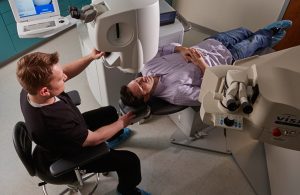
Iowa Eye Center ophthalmologists use the iLASIK technology. First, a precision laser creates a very thin flap on the cornea, which is the clear front surface of the eye. Your surgeon then uses Visx CustomVue Wavefront-guided S4 IR™ LASIK technology to perform a totally custom treatment for your unique eyes.
The flap technique used in iLASIK creates a protective shield during the procedure. Older LASIK techniques created a larger abrasion that was slower to heal. The benefits of the flap technique include:
- Less discomfort after the procedure
- Less chance of swelling
- Faster recovery
- Better overall vision after healing
While both LASIK and iLASIK are highly effective, iLASIK provides a more personalized experience. The key difference lies in the wavefront-guided technology used in iLASIK, offering improved precision and outcomes, especially for individuals with complex vision problems. In short, if you’re looking for a more tailored approach to laser vision correction, iLASIK could be the right choice.
What vision problems can LASIK surgery correct?
LASIK surgery is also called refractive surgery because it corrects a refractive disorder (also known as a refractive error). It occurs when the shape of your eye prevents light from focusing directly on the retina, causing blurred vision. Normally, the eye’s cornea and lens bend (refract) light so that it focuses precisely on the retina at the back of the eye, allowing you to see clearly. When this process is disrupted due to an abnormal eye shape, it results in one of several common refractive disorders:
Nearsightedness: This is when things at a distance are blurry, but vision for activities up close—like reading—is clear. It is caused by a cornea that’s too curved or an eye that’s too long, so light focuses before it hits the retina.
Farsightedness: This is when you are able to see things at a distance, but your vision for items up close is blurry, such as reading. It is caused by a cornea that’s too flat or an eye that’s too short, so light focuses beyond the retina.
Astigmatism: Blurred or distorted distance vision occurs when a cornea is shaped more like a football than a dome.