What are cataracts?
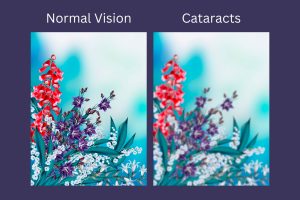
A cataract is the clouding of the eye’s lens, which is a transparent structure behind the iris that helps focus light onto the retina. As we age, the lens can become less flexible and start to develop cloudy areas. These cloudy areas, known as cataracts, can interfere with vision, causing it to appear blurry or hazy.
What causes a cataract?
While age is the most common risk factor, other factors can contribute to the development of cataracts, including:
- Diabetes: High blood sugar levels can accelerate cataract formation.
- Eye injuries: Trauma to the eye can lead to cataract development.
- Certain medications: Some medications, such as corticosteroids, can increase the risk of cataracts.
- Exposure to ultraviolet (UV) radiation: Excessive exposure to sunlight can contribute to cataract formation.
- Smoking: Smoking can damage the lens and increase the risk of cataracts.
It’s important to note they are NOT caused by eye strain, and they are not a cancer or a tumor.
How do I know if I have a cataract?
As a cataract grows, it can cause a variety of symptoms, including:
- Blurred or hazy vision
- Faded colors
- Double vision
- Sensitivity to light
- Difficulty with nighttime driving
- Frequent changes in eyeglass prescriptions
What are the best cataract treatment options?
Surgery is the best treatment. During the procedure, the cloudy lens is removed and replaced with an artificial lens called an intraocular lens (IOL). Today’s cataract surgery is a minimally invasive procedure that typically involves a tiny incision (about three millimeters; less than ⅛ inch), no stitches, and is performed under local anesthesia. The surgery usually lasts less than 15 minutes.
IOLs and new Advanced Technology Intraocular Lenses (ATIOLs) offer more options than ever before. Newer lens technologies can provide a broader range of vision and smoother transitions between distances. These innovations are designed to reduce dependence on glasses and better match your lifestyle.
- Monofocal IOLs: correct vision for one specific distance, such as far vision or near vision.
- Multifocal and Trifocal IOLs: designed to provide clear vision at multiple distances—near, intermediate, and far—reducing the need for reading glasses or bifocals.
- Extended Depth of Focus (EDOF) IOLs: create a continuous range of vision, offering a more natural visual experience, especially for everyday activities like driving or using a computer.
- Toric IOLs: can correct astigmatism, a common eye condition that causes blurred vision.
- Multifocal Toric IOLs: Combine the benefits of correcting for multiple distances and also correcting for astigmatism.
Recovering from cataract surgery
Cataract surgery is usually a very successful procedure with a high rate of patient satisfaction. Recovery time is typically short, and most patients can resume their normal activities within a few days.
If you’re experiencing symptoms of cataracts, it’s important to consult with an eye care professional for an evaluation. Early diagnosis and treatment can help prevent vision loss and improve your overall quality of life.