One challenge of spotting vision problems in children is surprisingly simple: they likely don’t know what clear vision is supposed to look like.
If a child has always seen the board at school as a little blurry or struggled to focus on the words in a book, that may simply seem normal to them. That’s why regular vision screenings and knowing what signs to watch for are so important.
We spoke with Iowa Eye Center ophthalmologist Dr. Jordan Gross about how parents can recognize potential vision problems, when children should have their vision checked, and why early correction matters.
How can I tell if my child is having trouble seeing clearly?
Children may not complain about blurry vision, especially when they’re young. Instead, parents may notice changes in how they watch TV, read, play, or complete schoolwork.
Some common signs that a child may be having trouble seeing include:
- Squinting or closing one eye to see more clearly
- Sitting unusually close to the TV or holding screens close to the face
- Holding books very close while reading
- Frequent eye rubbing
- Complaints of headaches or tired eyes
- Tilting or turning the head when trying to focus
- Avoiding reading or other close-up activities
- Losing their place while reading
- Difficulty concentrating on schoolwork
“Children don’t always have the words to tell us that something doesn’t look right,” says Dr. Gross. “That’s why it’s important to pay attention to changes in their habits. Squinting, moving closer to things, or avoiding certain activities can all be clues that we should take a closer look at their vision.”
Vision problems often show up at school
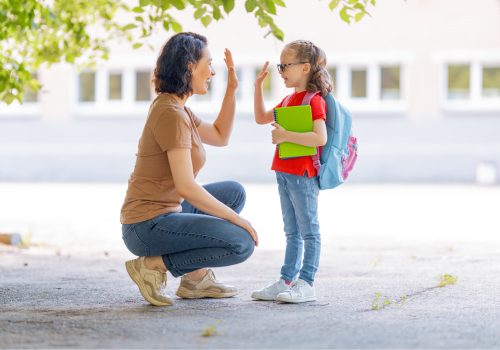
Sometimes the first signs of a vision problem aren’t noticed at home. They show up in the classroom.
A child who has difficulty seeing the board may copy information incorrectly, fall behind on assignments, or move closer to the front of the classroom. Near-vision problems can make reading and other close-up work more difficult.
Because so much learning depends on seeing clearly, an undiagnosed vision problem can sometimes look like an academic or attention issue.
“Clear vision is an important part of learning,” says Dr. Gross. “If a child is working harder just to see the words on a page or what the teacher is showing at the front of the room, it can make school more challenging than it needs to be.”
If a teacher mentions that your child is having trouble seeing the board, losing their place while reading, or struggling with visually demanding tasks, it may be time to schedule an eye exam.
When should children have their vision checked?
Eye and vision checks begin early in childhood, but it’s helpful for parents to understand the difference between a vision screening and a comprehensive eye exam.
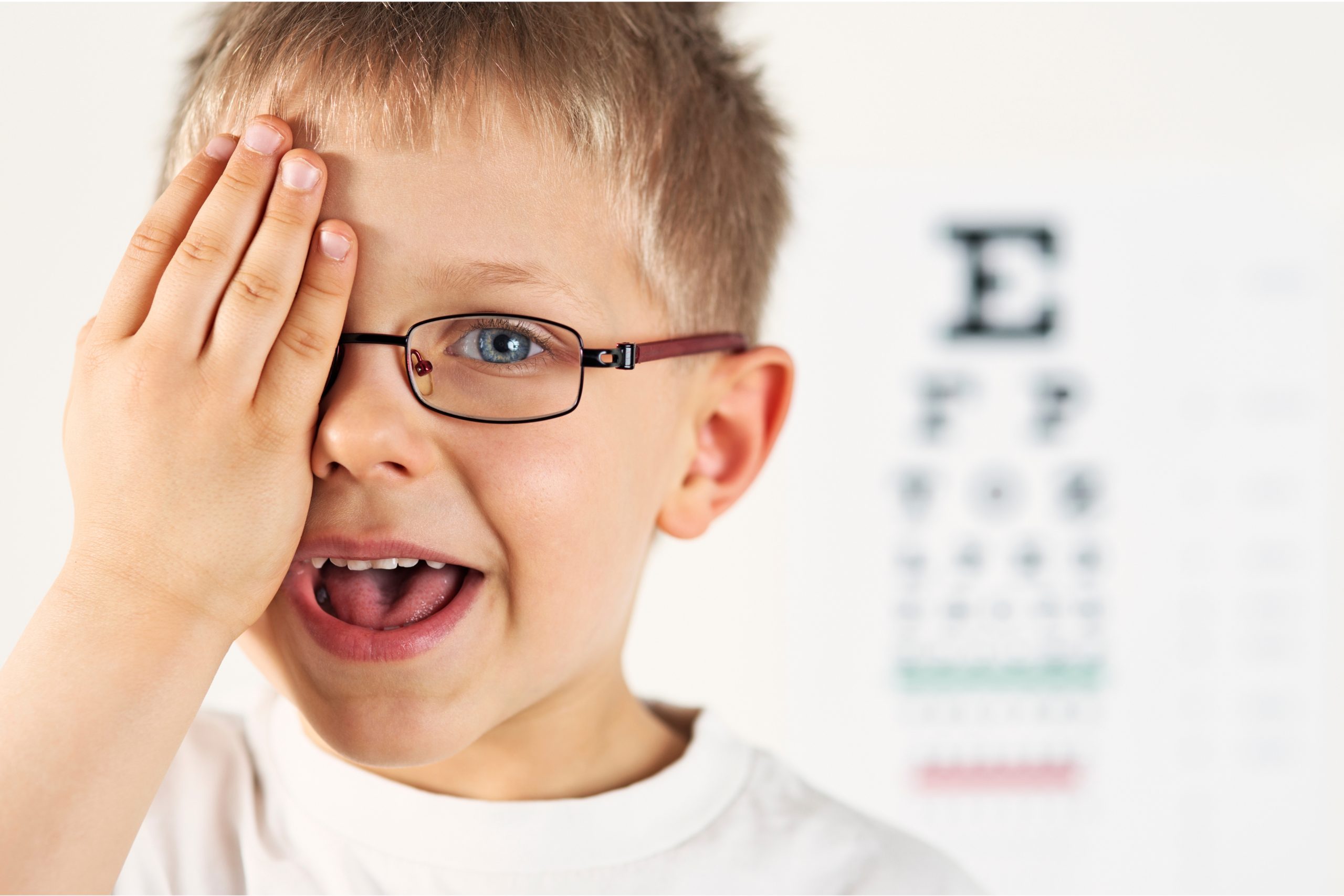
Vision screenings are typically performed as part of routine well-child visits with a pediatrician or primary care provider. These age-appropriate checks are designed to identify children who may be at risk for a vision problem and need further evaluation. In younger children, screening may involve examining the eyes and using specialized instruments to look for potential concerns. As children get older and are able to cooperate, screenings typically include visual acuity testing using an eye chart.
The American Academy of Pediatrics and American Academy of Ophthalmology recommend that eye and vision assessments begin in infancy and continue throughout childhood. Visual acuity testing can generally begin around age three, as soon as a child is able to cooperate with the test.
A comprehensive eye exam, on the other hand, is performed by an eye doctor and takes a more detailed look at a child’s vision and overall eye health. Unlike a screening, it can diagnose refractive errors such as nearsightedness, farsightedness, and astigmatism, as well as other eye conditions.
Not every child needs a comprehensive eye exam at a specific age if routine screenings are normal and there are no symptoms or risk factors. However, an eye exam should be scheduled if your child does not pass a vision screening, is showing signs of difficulty seeing, has certain risk factors or family history, or if you, your child’s teacher, or pediatrician have concerns about their vision.
Why does early correction matter?
Children’s eyes and visual systems continue to develop throughout childhood. When one or both eyes aren’t seeing clearly, early correction can support healthy vision development.
Glasses can correct common refractive errors such as nearsightedness, farsightedness, and astigmatism. In some cases, an eye exam may also identify conditions such as amblyopia, commonly called “lazy eye,” or strabismus, when the eyes do not align properly.
“The earlier we identify a vision problem, the sooner we can determine what a child needs to see clearly and support healthy visual development,” says Dr. Gross. “For many children, something as straightforward as the right pair of glasses can make everyday activities much easier.”
Clear vision can also help children participate more comfortably and confidently in reading, writing, sports, and other activities that are part of their day.
What if my child needs glasses?
For some kids, learning that they need glasses is exciting. For others, it may take a little getting used to.
Letting children have a say in choosing their frames can help. Finding glasses that fit comfortably and reflect their personal style can make them more likely to wear them consistently.
If your child needs glasses or protective eyewear for sports, finding frames and styles they feel comfortable and confident wearing is an important part of the process. The Optical Center at Iowa Eye Center offers a wide selection of eyewear for children and teens, and our experienced opticians can help families find options that fit well, look great, and meet their child’s vision needs.
Schedule an eye exam at Iowa Eye Center
If you’ve noticed signs that your child may be struggling to see clearly, or you simply have questions about their vision, schedule an eye exam with Iowa Eye Center.
Our team can evaluate your child’s vision, answer your questions, and recommend the next steps if correction is needed. If glasses are part of the solution, families can visit the Optical Center at Iowa Eye Center to find the right fit and style.
Call 319-362-3937 to schedule an eye exam, or request an appointment online.