
Your LASIK Questions Answered
According to the American Refractive Surgery Council, over 99% of LASIK patients achieve better than 20/40 vision, and more than 90% reach 20/20 vision or better. Additionally, LASIK has one of the highest satisfaction rates among elective procedures, with over 96% of patients reporting satisfaction. Many even experience vision improvements that surpass their best glasses before surgery.
With any elective surgical procedure, we always encourage asking questions as you do your research. Below are the most common questions we hear from our patients.
What’s the difference between “LASIK” and “iLASIK”?
LASIK surgery is the term used for the traditional vision-correction surgery that was first introduced in the 1990s. The surgeon creates a flap in your cornea using a small, hand-held blade called a microkeratome. The flap allows access to the layer underneath the stroma. A laser is used to reshape the stroma to correct your vision. The flap self-adheres once placed back in position.
iLASIK surgery utilizes an IntraLase laser to create a tiny flap to reach the cornea, rather than a steel blade used in conventional LASIK. The IntraLase is controlled by the surgeon via a computer. Another laser is used to gently reshape the cornea to correct your vision. As with LASIK, the flap self-adheres once placed back in position. Because laser technology creates the flap, it is considered non-invasive. The computer-assistance of the laser also makes it much more accurate than when done by hand. iLASIK also uses Wave Scan technology to create a 3D map of your cornea. That data is then used to reshape your cornea and correct your vision.
What can LASIK eye surgery correct?
LASIK can correct a range of nearsightedness, farsightedness, and astigmatism.
How is LASIK better than traditional eye surgery?
LASIK is preferable to other vision correction procedures for many reasons. Most importantly, the surgery is performed under a thin flap on the eye, so:
- Few surface cells are disturbed.
- There is very little discomfort.
- Healing occurs within hours.
- Recovery of vision is fast.
How long is the surgery?
Most patients are in the surgery suite for about 25 minutes and in our office for a total of about 30 minutes. The laser treatment itself is very brief — around one minute per eye.
Does the surgery hurt?
Most people have some brief (19 seconds) uncomfortable pressure when suction is first placed on the eye. The rest of the surgery may cause peculiar sensations but no pain.
Is LASIK covered by insurance? Can I use HSA or FSA funds to pay for surgery?
Most insurance companies consider LASIK an elective surgery, so often, it is not covered. For more information, go to Payments & Insurance.
Both Health Savings Accounts (HSAs) and Flexible Spending Accounts (FSAs) are commonly used to pay for LASIK. Be sure to check with your provider for specific guidelines, and you can also review the complete list of FSA-eligible expenses.
Can both eyes be treated during the same LASIK procedure?
Yes, it’s standard practice to perform LASIK on both eyes simultaneously. This approach helps ensure a balanced vision and quicker recovery. However, we will review your specific case to determine the best treatment plan for you.
Is it safe to fly after LASIK surgery?
Although your eyes typically heal within a day after LASIK, we recommend waiting at least one week before flying due to the potential risk of corneal swelling in low-oxygen environments. If you have upcoming travel plans, be sure to discuss them with your doctor before the surgery.
Will I still need reading glasses after LASIK?
Yes. After age 40, natural changes in our eyes make it difficult to focus up close. Laser treatment can’t correct that. However, there is a treatment strategy called Monovision that leaves one eye slightly nearsighted for reading. Ask us about it.
Can LASIK treat high prescriptions?
Yes, LASIK is an excellent solution for correcting a wide range of refractive errors, including high prescriptions. With advanced technologies like Visx CustomVue Wavefront-guided LASIK, even complex vision issues can be treated with precision.
Is LASIK an option if I have dry eyes?
Having dry eyes doesn’t necessarily disqualify you from LASIK. In fact, LASIK may sometimes help improve dry eye symptoms. Your surgeon will evaluate your tear production and recommend appropriate steps to manage dry eyes before the surgery for the best results.
Who monitors my progress after surgery?
Our surgeons provide care before and after surgery. Typically, your visits will be one day, one week, one month, three months, six months and one year after surgery – all included in the fee.
How much time off will I need for surgery?
Most patients resume normal activities within one to two days, with minimal restrictions.
What if I move my eye during surgery?
Our iris registration technology identifies your iris based on your pre-surgical scan and rotates treatment to exactly match your eye. Tracking technology directs the laser to precisely follow your eye movements. If your eye moves out of range, the laser stops until your eye returns to the correct position.
What type of anesthesia is used?
A small amount of Valium before surgery helps you relax. During surgery, we’ll use numbing drops on your eye. You will be awake and alert the whole time.
Are there any side effects of LASIK surgery?
Side effects from LASIK are mostly temporary and mild. For several days after surgery, you’ll see a halo around lights at night. This declines rapidly and then fades away in three to six months. For six months to a year, most people experience drier eyes. Over-the counter artificial tears are helpful.
Where do you do LASIK surgery?
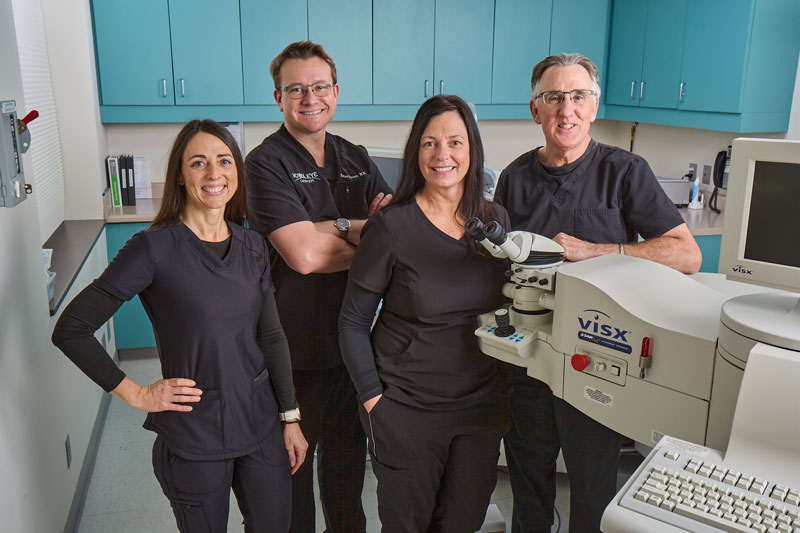
At Iowa Eye Center, we have a dedicated in-office laser surgery suite where all LASIK procedures are performed.
Is LASIK permanent?
Yes, the procedure changes the shape of your eye. But the treatment does not prevent the eye from changing naturally over the years.
What about touch-ups?
LASIK surgery is extremely precise but occasionally a patient needs a small touch-up to achieve their ideal vision goal. If you do need a touch-up during your first year after surgery, we provide it at no additional charge.
What does LASIK stand for?
LASIK is short for Laser Assisted In Situ Keratomileusis, which describes how the cornea is changed using a surgical device just under the front surface of the eye.
Are there alternative surgeries?
Other refractive laser operations are surface treatments. In these procedures, most surface cells on the cornea are scraped off and reshaping is done directly on the front of the eye. Iowa Eye Center surgeons occasionally perform surface treatments for medical reasons but LASIK or ILASIK is our procedure of choice. Surface treatment results in:
- A large abrasion on the front of the eye
- At least 3 to 4 days of healing
- Significant pain
- A long delay in recovering vision
Get your FREE LASIK screening
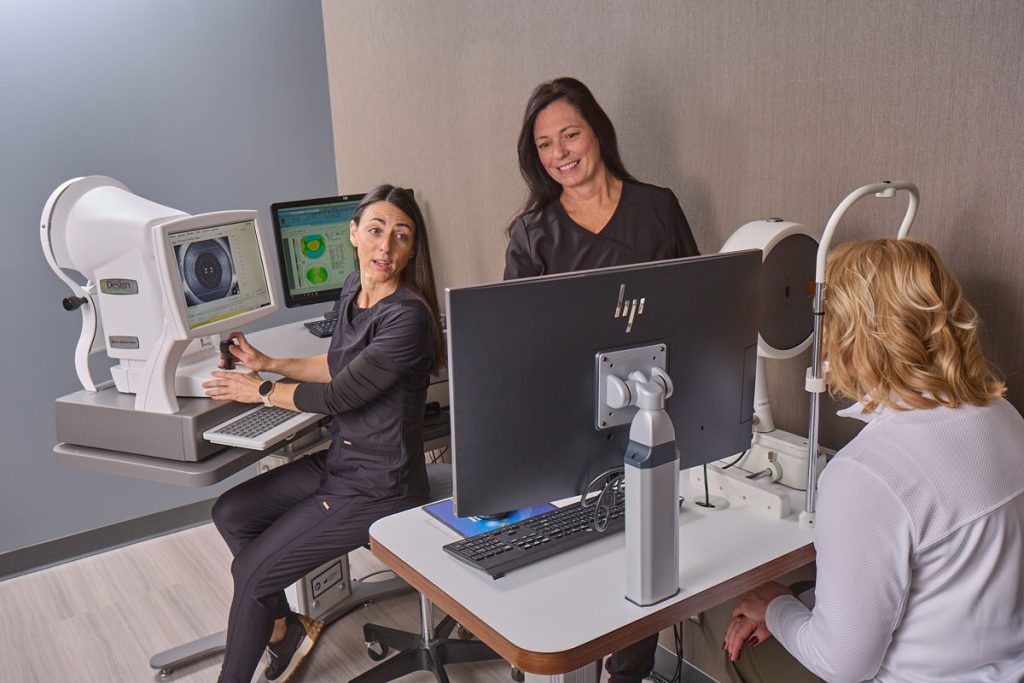
At Iowa Eye Center, we offer complimentary LASIK screenings with our Refractive Surgery Coordinators. During your visit, we’ll conduct initial tests, discuss your medical history, and talk about your vision expectations.
Call (319) 362-3937 today to book your free consultation.