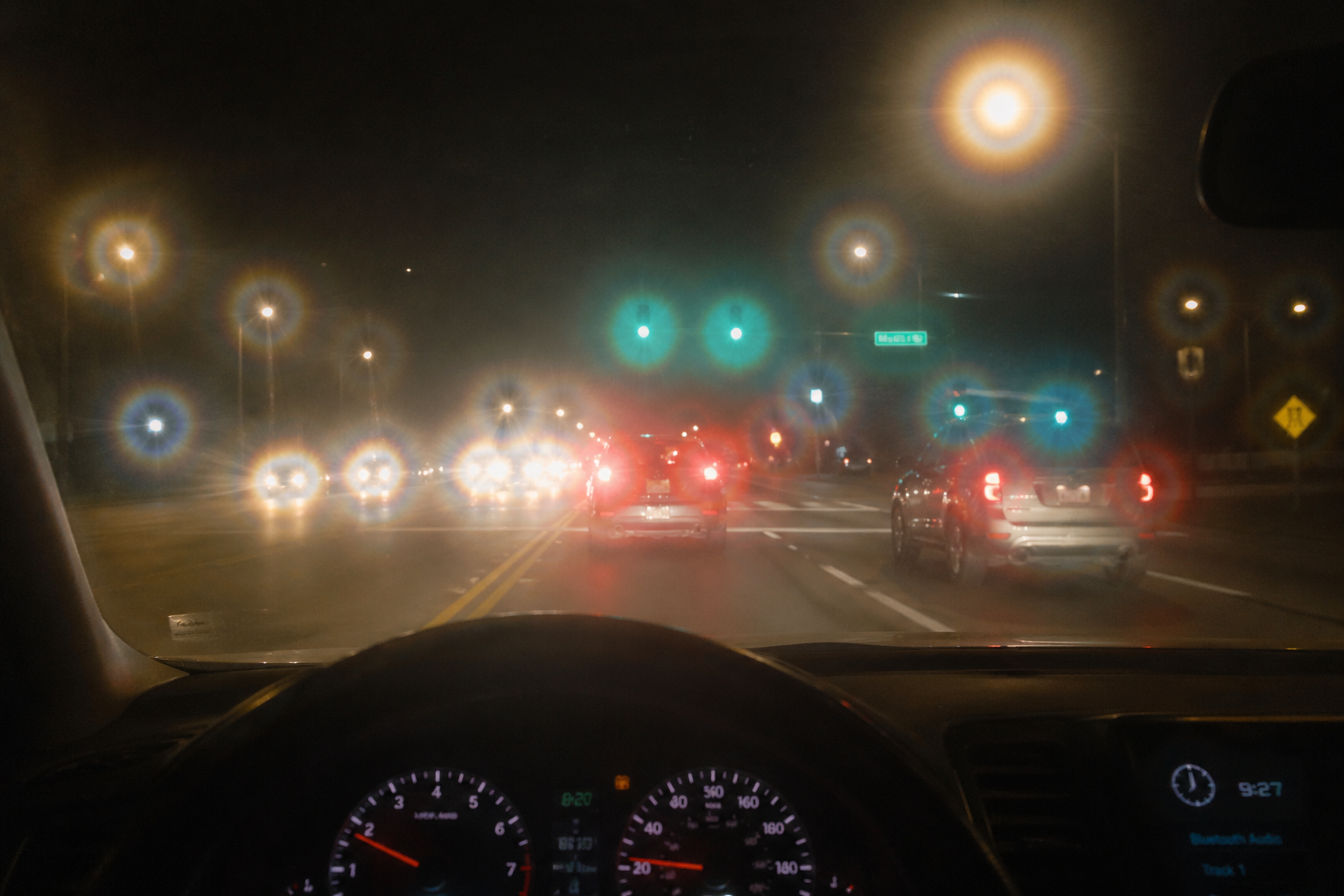
Have you ever noticed seeing rings or glowing circles around headlights or streetlights, especially at night? For some people, these “halos” are occasional and harmless. For others, they can be a sign that it’s time to have your eyes checked.
We asked Dr. David Muller of Iowa Eye Center to explain what’s behind this common visual symptom and when it may require attention.
What causes halos around lights?
Halos are often related to how light enters and focuses in the eye. When something disrupts that process—whether it’s dryness, a refractive issue, or changes in the eye’s lens—you may notice a glowing or blurred effect around lights. Halos tend to be more noticeable in low-light conditions, when your pupils widen and allow more light in.
When halos can be normal
In many cases, seeing halos isn’t a cause for concern. You might notice them:
- While driving at night, especially in rain or fog
- Shortly after getting new glasses or contact lenses
- When your eyes are tired or dry
These situations can temporarily affect how clearly light is focused, and the halos often go away on their own.
Could it be cataracts?
One common cause of ongoing halos—especially as we age—is cataracts.
Cataracts develop when the eye’s natural lens becomes cloudy, scattering light rather than focusing it clearly.
“Cataracts tend to cause glare; people will start to get haloing or starbursting around lights, so it could make things like night driving or driving in rainy conditions quite difficult,” says Dr. Muller.
“In general, cataracts simply come on with age. The lens gradually becomes more hazy or more opaque as part of the normal aging process, but there is quite a bit of variability with that, and we certainly do see younger people who get cataracts for no real apparent reason.”
Don’t ignore changes in your vision
If halos are becoming more frequent, more noticeable, or are affecting your ability to see clearly at night, it’s a good idea to schedule an exam. While occasional halos can be normal, persistent or intensifying symptoms may point to an underlying issue that should be evaluated.
Pay attention to:
- Increasing glare or light sensitivity
- Difficulty driving at night
- Blurred or hazy vision along with halos
These symptoms often develop gradually, which can make them easy to overlook at first. Addressing them early can help protect your vision and keep everyday activities like driving safe and comfortable.
Call Iowa Eye Center at 319-362-3937 to schedule an exam and get clear answers about your vision.